




Machine shops exist across the U.S. in all shapes and sizes; however, that “uniqueness” can sometimes cause customers to question consistency in the final product.
But what if machine shops could be franchised like a fast-food chain? In hindsight, it seems like a no-brainer, but it took the minds behind Isembard to make the franchising of machine shops a reality.
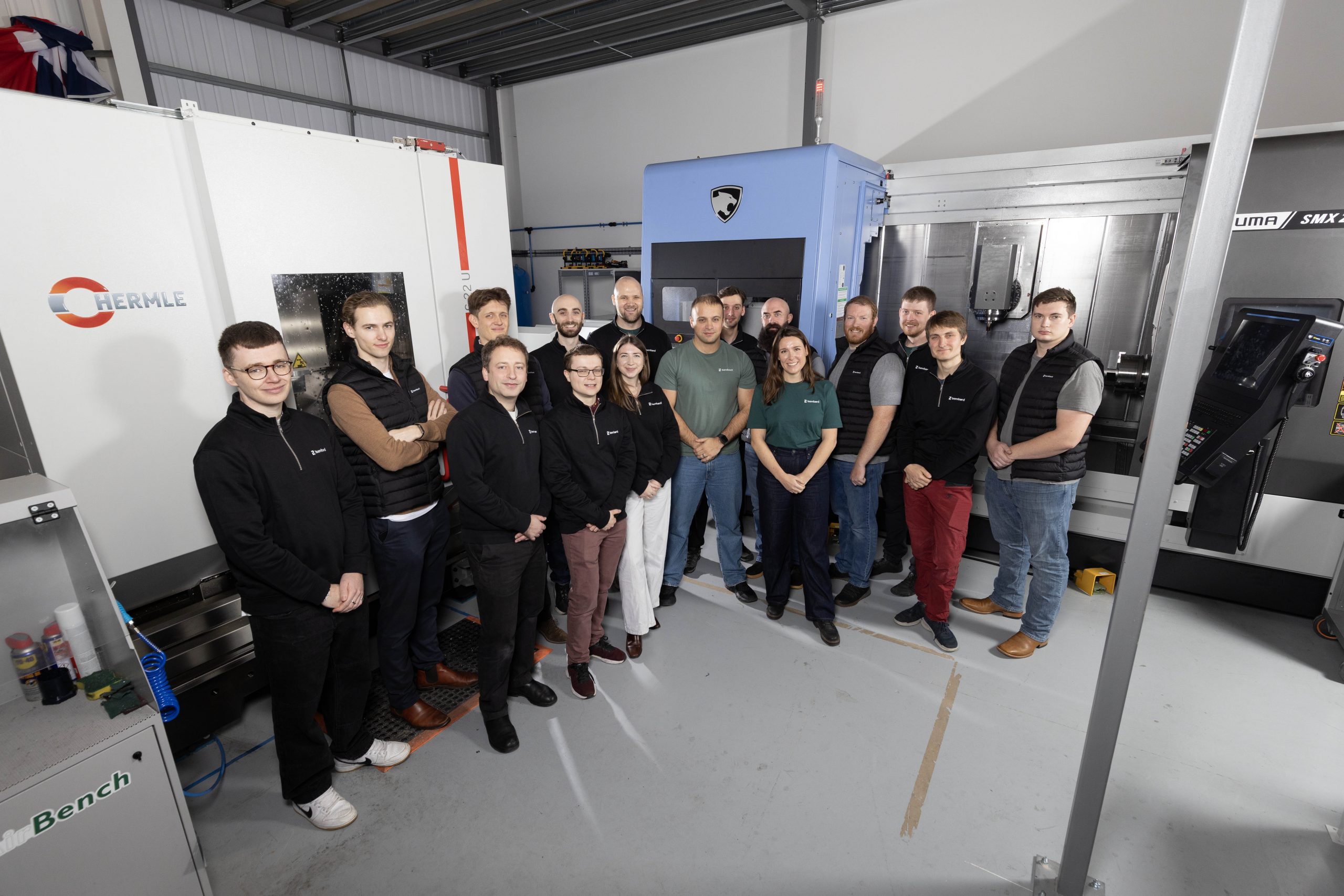
“We were incorporated in October 2024; the premise was that there wasn’t any kind of unified effort up until that point to solve a diminishing supply as demand continued to increase for critical industries,” said Justin Baucum, who leads U.S. Expansion at Isembard, from Dallas, Texas.
Global enterprise
Even though Isembard was founded in London — where it is headquartered — it was always intended to be a global enterprise tackling three manufacturing challenges: quickly creating more capacity, interconnecting a network of factories, and designing a franchise business model, according to Baucum.
“While we have what you could call corporate-owned factories, the primary growth mechanism for Isembard is going to be through a franchise model,” he said. “We think that model works really well for the industry, because, historically, these privately owned machine shops have been distributed all around the country. The same applies in the U.K. and in Europe, but there are still all the benefits that come along with being part of or having partnerships, whether formal or informal, with a larger network.”
To that end, Isembard has formalized that and is giving benefits to existing machine shops or with people who want to get into the industry, according to Baucum.
“In the past, the only way to do that was you either knew somebody or you knew how to program and operate CNC machines,” he said. “There was no real pathway for outsiders. By doing a franchise model, we’ve thought through 80 to 90 percent of the process for them. We’re making more new pathways into the industry.”
Benefits of consistency
Franchising machine shops became a precedent when Isembard became aware of the large number of them across the U.S., according to Baucum.
“There are somewhere north of 20,000 machine shops with different manufacturing methods, and historically they’ve been decentralized,” he said. “A lot of people look at that as a fragmented industry; however, the industrial base where most things are actually produced are spread across the country.”
By taking advantage of a business model that has worked successfully within other industries — fast food, for example — customers get the benefits of consistency and working with a known brand, according to Baucum. “I think it’s really interesting when you look at other industries and there is an immediate name that comes to mind — probably McDonald’s,” he said. “In manufacturing, there’s not really a front-runner of where people may think of defense primes and things like that. But in order to have the reach and the brand focus, you have to have a model that fits within how the industry is historically operated. And these places are fundamentally doing the same process. Raw material comes in; you program it; you go through the quality steps, and you ship it. There is a lot of unification that can be done. Even though the franchising model hasn’t historically been used, it actually fits really, really well.”
5-axis CNC machines
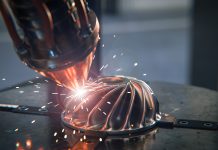
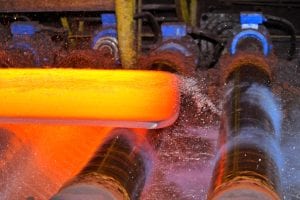
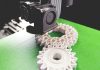
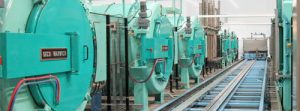
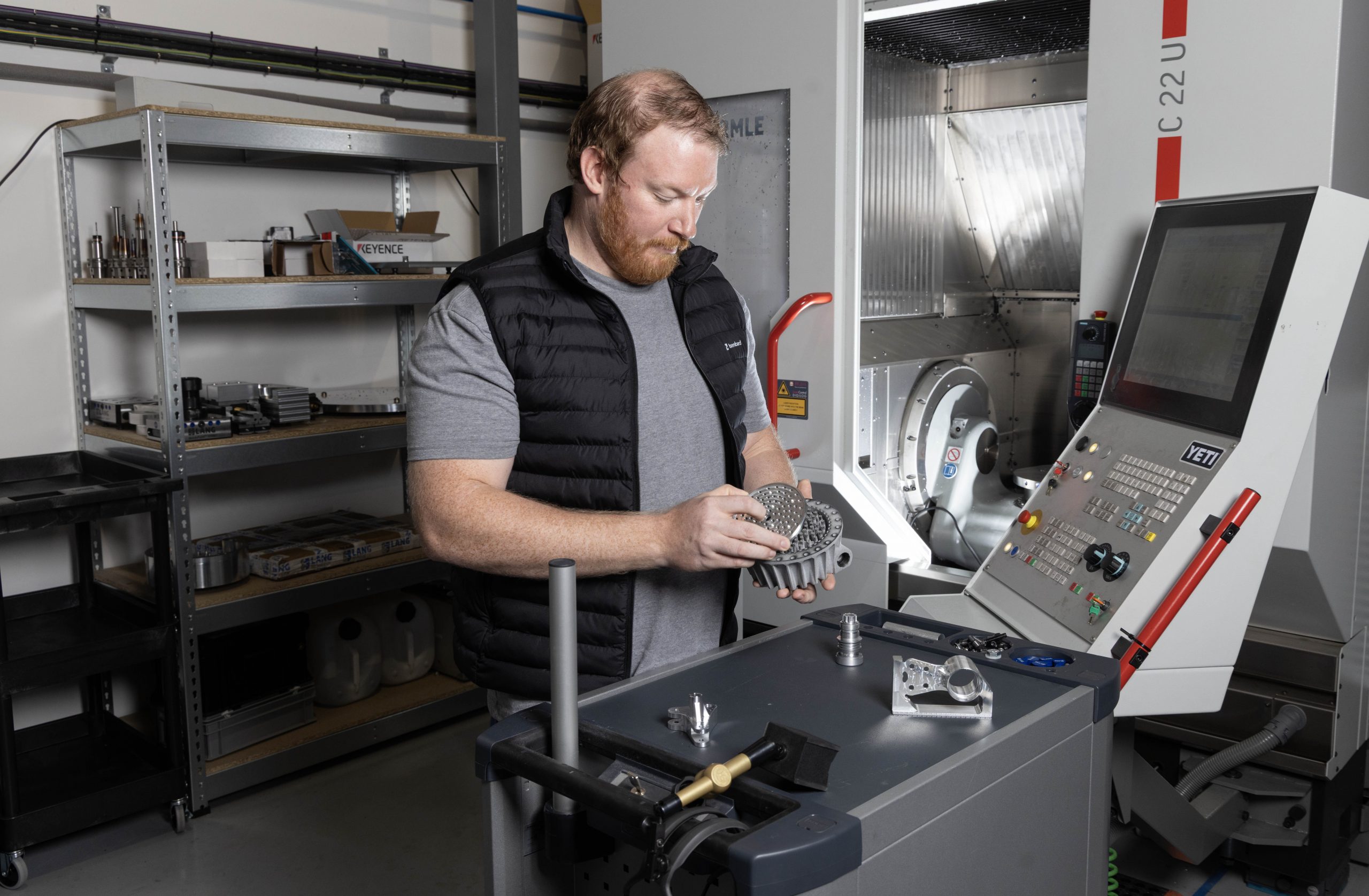
The equipment prominent in Isembard’s locations consists of full 5-axis CNC machines capable of machining a wide variety of pieces, including gears. Much of what is made by Isembard is for defense, energy, and aerospace where a majority of the products go through different heat-treating processes as well, according to Baucum.
“A lot of those are just due to the use cases of those products,” he said.Part of the integration of multiple locations into a franchise model is to have the machines controlled by software created specifically for the shops under the Isembard umbrella, according to Baucum.
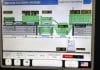
“You can think of it as an ERP or MES on steroids,” he said. “It’s a modula r approach to how we designed the software. We started with simple things like supplier management in a really robust database. Then, we built out quoting, which is another really big pain point for the industry. We moved on to scheduling, and we’ll continue to take that modular approach where we get a lot of value from a particular functionality. Long term, if you step into a factory, whether you’re the general manager or a machinist, you’ll be interacting with this one platform to do everything that you need to do.”
‘Forge industrial acceleration’
Isembard’s dedication to its customers is captured in its mission statement: Forge industrial acceleration, according to Baucum.
“That could just sound like a bunch of words slapped together, but what it turns out to be, in reality, is that we bring a degree of intensity that I haven’t seen in the industry,” he said.
Recently, one of Isembard’s factories worked all night on a large contract for a defense company customer with some immediate needs, according to Baucum.
“As soon as it was done, I had somebody on a plane to the West Coast to hand deliver those parts that we produced for them,” he said. “We don’t want to do that every time, but it’s something that we were proud to do. We will move heaven and earth to make sure that we accomplish what is needed.”
Isembard also takes that approach when setting up new factories while constantly revising its software, according to Baucum.
“The software of three months ago looks nothing like what it looks like today,” he said. “That’s the day-to-day of: ‘Hey, here’s a new idea.’ There’s an intensity to it. We know we need to be pretty ferocious with how we go about what we’re doing. We let demand drive a lot of our decisions.”
Customer collaboration
With that in mind, Isembard works with customers who are developing a new product type or they’re in the prototype phase, according to Baucum.
“What we want to do is not just be a shop or somewhere that they send some parts to; we want to be a true partner,” he said. “We have a lot of folks that have design-for-manufacturing experience. We’ll work with those customers and give them input from the material choices that they have, while we try to understand the end use case of what they’re doing. We work closely with them. When we’re going through the programming process, we’ll identify things and give feedback. That way, we’re saving the customer money, time, and effort, but we’re also helping them calibrate what they’re designing so that it’s manufacturable.”
Working closely with customers while also giving them options through a franchised machine shop has helped with the efficiency of those customers’ needs, according to Baucum.
“Overarchingly, it’s harder and harder to find reliable machining capability for these growing companies,” he said. “Part of that’s due to just the industry not having a lot of new people to get involved with it. And, at a lot of shops, the owners are starting to retire, or they’re moving on to other things. I’ve also seen a pattern of when it gets to really complex things, there are fewer people who are actually able to produce them.
“We’ve heard that from a couple of our customers. They send us the hard stuff because nobody else wants to do it. In this industry, people want the ‘rinse-and-repeat’ sort of thing where it’s just to keep the spindles cutting metal, but somebody has to do the hard stuff. And that’s where we come in. We’re the solution. We can do the easy stuff, sure, but we also are willing to do the really hard stuff and do it at scale.”
Tackling the ‘hard stuff’
Some of that “hard stuff” included the assembly for an anti-drone weapon system, according to Baucum. “One of the base housings for this took about a week to program; it required all this specialty tooling,” he said. “Part of it was because of how it was designed, but it had never been machined before. It had only been designed. This was the first time it was being made in the real world. The machining time for this one part was 25 to 30 hours.
Most places wouldn’t even take that on because they don’t have the machines that could handle the tolerances required or they just don’t want to undertake this beast of a part.” Taking on those complex jobs while having the bandwidth to do it, at many locations, is just part of the enthusiasm that Baucum emphasizes as Isembard looks to the future.
“It’s going to be harder and harder to find places that will do machining, heat treating, and do this full range of machined parts,” he said. “In the movie The Founder, which tells the story of McDonald’s, there is a scene where McDonald’s founder Ray Kroc mentions that, in every small town in the U.S., there is a church, a school, and a McDonald’s,” he said. “Isembard wants to be the fourth business in that model. It’s because it’s something that’s so fundamental to driving prosperity and creating livable jobs in our nation. It’s something to take pride in because we’re building something important.”
And what continues to make Isembard’s franchise model unique is that the machinists of today can be the franchise owners of tomorrow, according to Baucum. “At least half of our CNC engineers want to have their own businesses at some point, and so the franchise model base supports that,” he said. “That’s something that, even for myself, I could see a day where I have an Isembard factory as a franchise because I think it’s a great model, and it’s something that I’m super interested in.”
Backed for growth
Isembard’s momentum has also been reinforced by fresh capital. Isembard recently raised a $50 million Series A led by Union Square Ventures, signaling strong investor confidence in its model.
As demand for advanced manufacturing continues to grow, the company is actively seeking franchise partners, from experienced operators to first-time business builders, to join its expanding U.S. network.
More info www.isembard.com