






Decarbonization efforts are becoming a more urgent priority among heat-treat businesses, both big and small. Government directives guiding companies in Europe will eventually affect U.S. businesses that want to continue to work with their overseas customers.
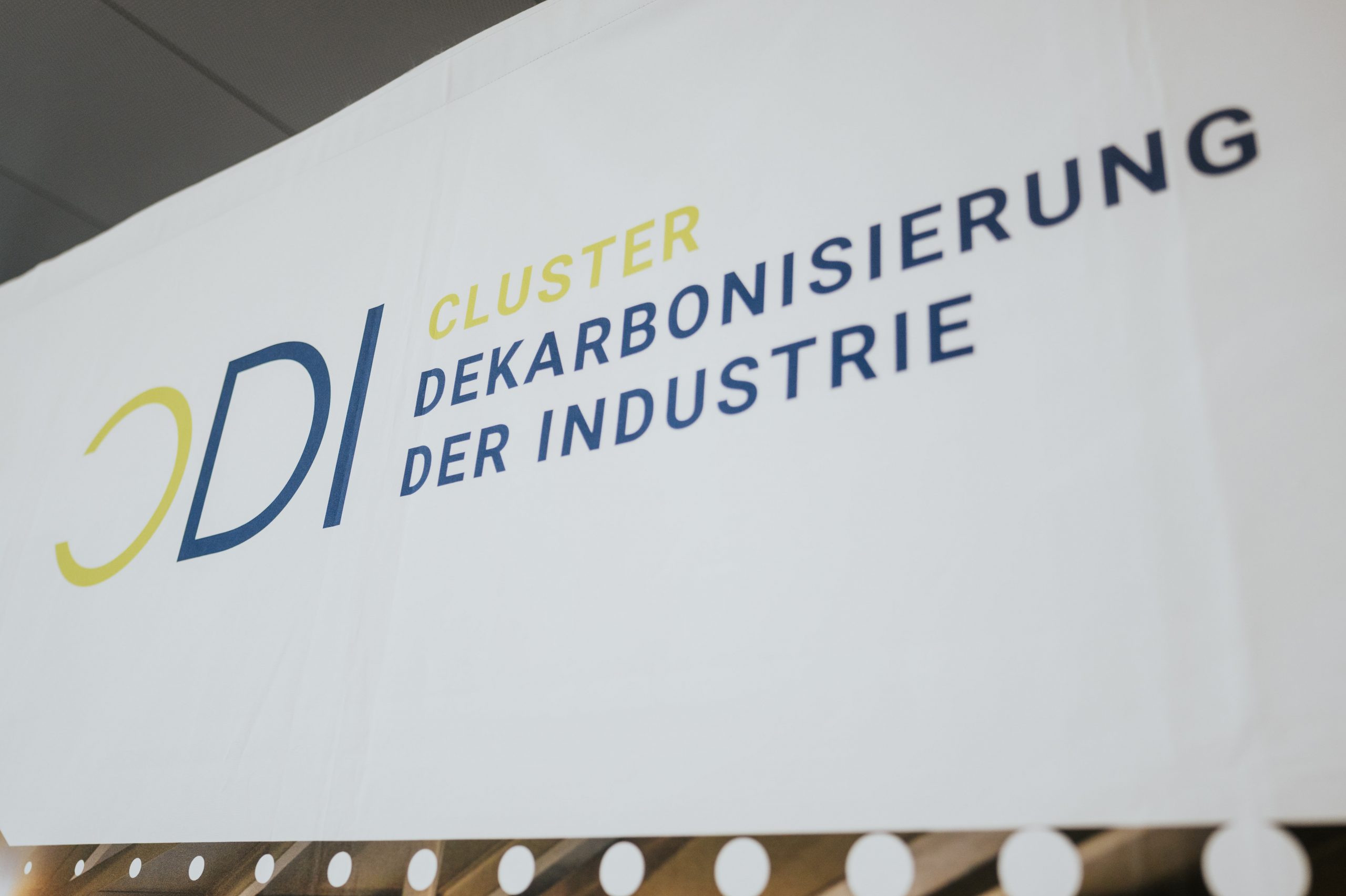
In an effort to bring these carbon-reduction initiatives to the forefront, the Cluster for Industrial Decarbonization (CDI) is working with companies to identify ways they can make their processes more environmentally friendly.
“We’re German-based, but we’re also looking into international matters,” said Matthias Heck, cluster and network manager at CDI. “We have an international innovation group, which is a group of CDI partners who try to identify specific measures and activities, such as delegation tours or potential analyses of other countries and technologies. The focus is on knowledge transfer, supporting partners in tapping into international markets, and networking with international decarbonization players from research and industry.”

Founded in 2021
CDI was founded in 2021 by an initiative of four entities from Cottbus, a town near Berlin. The founding partners include Brandenburg University of Technology (BTU) Cottbus-Senftenberg, the Institute of Low-Carbon Industrial Processes from the German Aerospace Centre, the Fraunhofer Research Institution for Energy Infrastructure and Geotechnologies (IEG), and the Competence Centre on Climate Change Mitigation in Energy-Intensive Industries (KEI).
They founded the CDI as an interdisciplinary network with the goal of driving solutions and innovations at the interface of science, business, politics, and administration. Its partners are companies from the energy intensive industries that have the opportunity to exchange cross industry concepts to tackle decarbonization. “We are funded by the federal German government and are part of the strategy to reach the German goal of carbon neutrality by 2045,” Heck said.
Focus on process heating
Although it doesn’t specifically work for the heat-treat industry, the aim of CDI is to look at energy-intensive industries including heat-treat as well, according to Heck.
“The heat-treat industry uses process heat that is fuel based just as other energy-intensive industries do,” he said. “Our partners are from all across the field of energy-intensive industries. We have a general strategy and try to work from the region. We’re rooted in the Lusatia region that’s situated southeast of Berlin and is, at the moment, transforming itself heavily because it used to be an open-cast coal mining region. Germany has been resolute to abandon coal energy by 2038. That’s why there’s a lot of action in the field of transformation in that region. We try to connect industries, science, and associations in a strong cooperative cluster.”

CDI’s goal is to represent cross-industry interests in an agile, interdisciplinary, and service-oriented manner through its 137-partner network, according to Heck.
“We are keen to strengthen knowledge transfer, promote cooperation, and offer guidance on decarbonization solutions within the framework of our innovation groups, our events, and policy papers that we publish,” he said. “These innovation groups are our core element, and they mark a protected space for exchange of our partners. Experts share insights on key topics, and we try to develop applicable solutions like our web tool. I coordinate the innovation group that covers process heat. Topics in this innovation group are, for example, decarbonization of industrial process heat as well as the technological solutions to replace fossil-fuel heat in general.”
CDI’s web tool
CDI’s new web tool is designed to evaluate a company’s current situation in the field of process heat and help it to evolve and implement a decarbonization strategy, according to Heck.
“The idea of the web tool is rooted in the fields of our innovation group of process heat,” he said. “They started developing it two years ago. The main initiative has come out of that group, and 40 experts reviewed the tool during the development process several times. The web tool was released in February.” The web tool is designed to be easily accessible, according to Heck.
“You don’t have to have engineering skills to get started,” he said. “At first, you enter some general information about your company and about your industry, and the tool helps you to model your process heat streams and flows with an easy drag and drop menu. You just need to know your inlet and outlet temperature, your heat medium, and either your energy flow rate, volume flow rate, or mass flow rate to model your heat flows. When you finish modeling all of your flows, the tool does a pinch analysis and calculates the pinch temperature or the pinch range that marks the temperature or the temperature range from where the design of your heat system is most efficient. It can be used to reevaluate your heat streams as well as be the basis of a new design for your heating system. In the end, you will receive concrete recommendations for reducing the CO₂ emissions of your process heat, which can then be discussed with other departments in your company.”
A wide range of information
Web tool users also can get information about entities that work with process heat decarbonization that can provide pathways toward climate neutrality, according to Heck.
General information about process heat decarbonization is also available that can be used to individualize an action plan involving the use of excess heat and electrification or the reduction of energy waste by energy efficient measures.
CDI sees the importance of worldwide decarbonization, which is why Heck emphasized the need for CDI’s input.
“Process heat is one of the biggest emitters of carbon dioxide,” he said. “In Germany, energy-intensive industries are responsible for around 22 percent of all carbon dioxide emissions, about two-thirds of which are from process heat production. As you can imagine, decarbonizing process heat is one of the biggest levers toward carbon neutrality. It’s necessary to reach the goals of the Paris Climate Agreement, but not only for ecological reasons. The current war in Iran and the fossil energy crisis it has provoked have shown that industrial resilience for non-oil-and-gas producing countries can only be achieved by being independent from fossil fuels. Energy prices are really negatively impacting our economy, and that’s why we need to change our dependence on that.”
Heck also mentioned that the price for a ton of carbon dioxide will be rising eventually, which makes the reduction of emissions more profitable as well as a necessity for economic sustainability.
“We at CDI are trying to help our partners lower their carbon emissions to have sustainable businesses both economically and ecologically,” he said.
Growing beyond Germany
As CDI strengthens its connections beyond Germany, Heck has hopes that other countries will see the market benefits in developing sustainable technologies and solutions.
“That’s something that the German industrial branch will be looking out to do,” he said. “With sustainable energy prices being as low as they are and sinking further down, those applications with sustainable energy sources will be the most economical solutions in the future. Having these technologies and being able to sell them will be an advantage, and that’s something that will impact business cases in the future.
That’s why those technologies we’re looking into will be distributed worldwide.”
For U.S. companies, lowering emissions for their products or moving to a decarbonized model will help them when they are dealing with the European market, according to Heck.
“If U.S. companies want to sell products to Europe, CBAM — the carbon border adjustment mechanism — will have additional fees on some products they are importing, they will be charged with the carbon price that is applicable here in Europe,” he said. “That’s a reason why companies that want to target the European markets need to adjust to do so.”
Successes and Milestones
In addition to its web tool, CDI has reached several other milestones in its short history that have helped to address decarbonization, according to Heck.
“We established a big conference in the Lusatia region — the Lausitzer Fachkonferenz Conference — that’s the leading conference on carbon neutrality in this region,” he said. “The foundation of our Advisory Board was one of our key milestones. The members provide entrepreneurial and interdisciplinary expertise. In this way, they support the steering group in the customized development of the cluster into an innovative partner network for a greenhouse gas-neutral industrial future. The companies that are on this advisory board are ArcelorMittal, Cemex, Felix Schoeller, TRIMET Aluminium, Wiegand-Glas, and the ZINQ Group, as well as our four founding members. They are advising us so that our activities match the needs of the energy-intensive industries, and we’ve put out major projects including key studies.”
Heck also said it is important to engage a younger audience, and CDI recently established a decarbonization summer school for the second year in a row.
“We’re trying to form a motivated new generation that will help us fight our way toward carbon-neutral,” he said.
More info: www.cluster-dekarbonisierung.de/en
Web tool: www.cluster-dekarbonisierung.de/tool