





Industrial combustion systems remain at the heart of process heating across manufacturing, energy generation, and infrastructure. As energy prices fluctuate and environmental standards tighten, burner technology has quietly evolved into a high-precision field where control, safety, and sustainability must coexist.
In the U.K. and across Europe, companies such as Dunphy Combustion have spent decades refining industrial burner design to balance reliability with efficiency and low emissions. The shift from conventional on/off systems to digitally integrated combustion control has turned what was once a purely mechanical process into an intelligent, monitored, and adaptive operation.
From fixed flame to flexible fuel
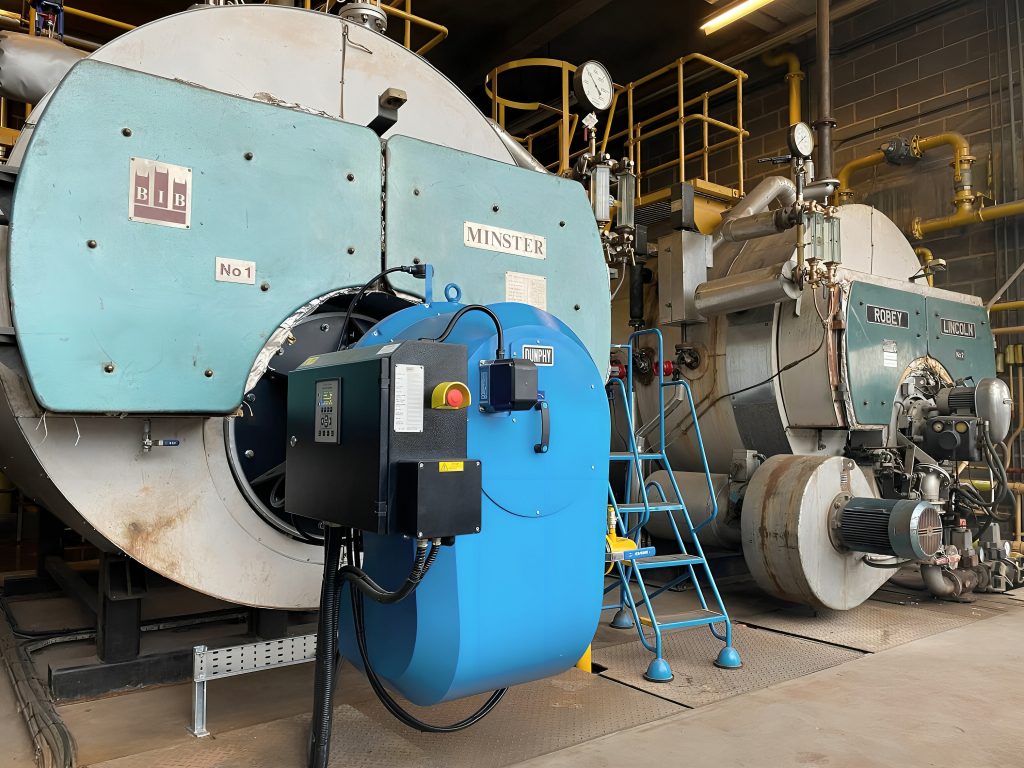
Industrial burners once relied on narrow fuel parameters, simple mechanical air registers, and manual tuning. Modern plants now demand multi-fuel flexibility, continuous operation, and instantaneous load response.
Advances in burner design — including multi-fuel, biogas, hydrogen, and renewable-fuel burners — are enabling users to meet both production and sustainability targets. Systems developed in the U.K. demonstrate this range clearly: A single burner platform may operate on natural gas today and be converted to hydrogen or bio-methane in the future with minimal modification.
Hydrogen-capable burner technology is a major step in preparing process plants for a lower-carbon energy mix. Engineers are now designing combustion heads, nozzles, and flame monitoring systems that maintain stable operation even when hydrogen’s higher flame velocity and different ignition characteristics come into play.
Control is everything
The combustion process is inherently dynamic. Variations in fuel quality, air temperature, and load demand can push a burner off its optimum point within seconds. Intelligent control systems — such as those using integrated combustion management, oxygen trim, and variable-speed drive fan control — have become critical to maintaining efficiency.
Where older installations relied on mechanical linkages between air and fuel valves, digital servo control allows each actuator to move independently with repeatable precision. The result is fine-tuned, air-to-fuel ratios across the full firing range, reducing excess air and the associated heat loss up the stack.
Pressure control also plays a decisive role in combustion stability. Industrial gas boosters, often operating in conjunction with combustion control systems, help maintain consistent fuel supply pressure when upstream conditions fluctuate.
Designed for demanding industrial environments, modern booster sets support reliable burner operation at higher capacities and are increasingly treated as an integral part of the overall combustion system rather than a standalone accessory.
Efficiency through data
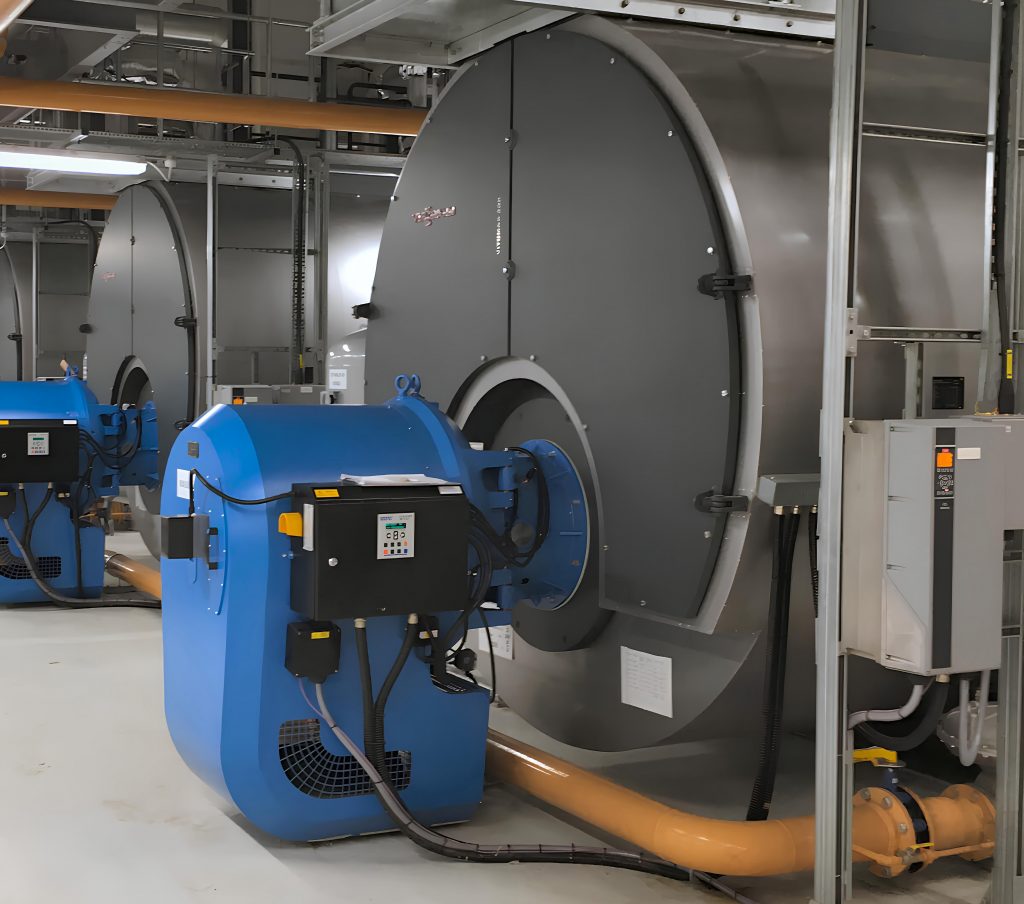
Digital monitoring has changed the way maintenance teams interact with combustion systems. Integrated sensors feed live data on temperature, pressure, and oxygen levels to PLC-based control panels or plant SCADA networks. This information allows engineers to perform trend analysis, optimize start-up and shutdown sequences, and schedule maintenance before performance drifts.
Manufacturers offering burner consultancy and upgrade services report many industrial sites still operate burners installed decades ago. Retrofitting those units with modern control packages — or replacing mechanical linkages with electronic servo drives — can deliver measurable improvements in combustion efficiency and operational stability.
In many cases, these upgrades reduce excess air, improve flame consistency, and enhance overall thermal performance. The resulting fuel savings and reliability improvements often allow plant operators to justify investment over relatively short operating periods, particularly in energy-intensive processes.
Service providers now approach burner optimization as part of a wider energy strategy rather than an isolated task. By auditing plant load profiles, heat exchanger performance, and exhaust composition, engineers can calculate precise tuning adjustments to reduce emissions while maintaining output.
Alternative fuels and the road to net zero
The combustion sector faces the same decarbonization challenge confronting every industrial energy user. The transition to hydrogen, biogas, and synthetic fuels is accelerating innovation in burner design, materials, and control logic.
Renewable-fuel and biogas burners introduce new variables — differing calorific values, moisture content, and flame stability — that demand adaptive control algorithms. Flame sensors must detect lower luminosity flames, while burner management systems need to handle mixed-fuel operation without compromising safety interlocks.
For some manufacturers, modular multi-fuel burners have become the preferred solution. These units can operate on natural gas today and switch to renewable fuels tomorrow, reducing downtime and capital expenditure when plant operators transition their energy source.
Combustion specialists are also re-examining burner geometry and airflow patterns to maintain efficiency while reducing carbon impact. Modern design approaches combine engineering experience with advanced analysis and testing to optimize flame shape, mixing characteristics, and heat transfer.
These refinements contribute to more compact and stable flames, lower NOx formation, and improved consistency across the firing range, supporting both efficiency and emissions compliance.
Integrating burners into smarter plants
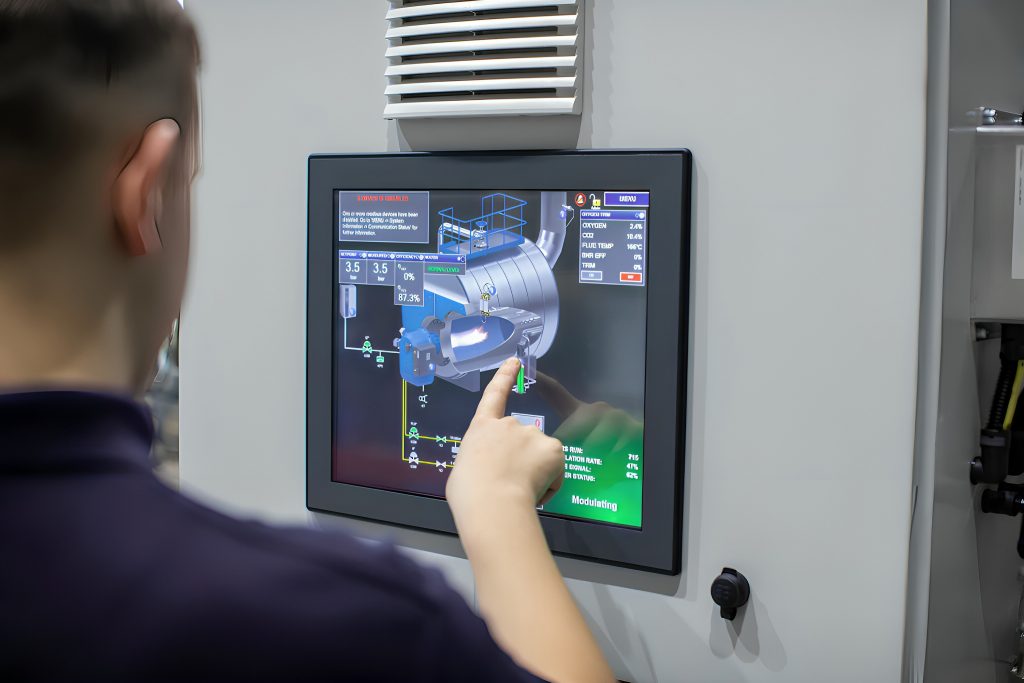
The wider move toward Industry 4.0 is pushing burner and boiler systems into the digital ecosystem of the plant. Combustion control panels can now communicate with site-wide automation systems using standard industrial communication architectures.
This level of integration enables real-time load matching between the burner, boiler, and downstream process equipment, allowing heat input to respond dynamically to changing production demands. In a food-processing line, for instance, burner output can automatically modulate to match the load of steam kettles or dryers. In district heating, network sensors feed back temperature and flow data to adjust firing rates for optimum efficiency.
In larger installations, such as packaged plant rooms or skid-mounted energy centers, burners, gas boosters, and control systems are now being pre-engineered as fully integrated modules. This approach simplifies commissioning, ensures compliance, and enables more consistent combustion performance across multiple heat sources These advances also enhance safety. Automated sequencing, flame detection, and fault diagnostics now meet rigorous international standards while simplifying operator interfaces. Maintenance staff can view performance dashboards remotely, reducing physical intervention in hot or hazardous areas.
Service and lifecycle support
Burner performance is not static. Over time, combustion characteristics drift as components age and environmental conditions change. Burner upgrades and consultancy services have become essential in extending equipment life while meeting modern emission standards.
A typical upgrade might include a new modulating control panel, replacement of pneumatic linkages with servo motors, and the introduction of flue-gas oxygen monitoring. Each step incrementally improves combustion stability and efficiency, aligning legacy systems with current expectations.
Long-term service partnerships also support compliance documentation and operator training — areas increasingly demanded by insurers and regulators.
Conclusion
Combustion technology continues to evolve quietly but decisively. Today’s industrial burners combine mechanical robustness with digital precision, enabling manufacturers to deliver consistent heat, lower emissions, and measurable energy savings.
From hydrogen-ready designs to data-driven optimization, the sector’s innovation is reshaping how heat is produced and controlled in industry.
Organizations such as Dunphy Combustion exemplify this evolution, demonstrating how engineering expertise and continuous development can keep a mature technology both efficient and relevant in a rapidly decarbonizing world.