





What is the European Innovation Centre for Industrial Transformation Emissions (INCITE) web platform?
The INCITE platform is a public digital initiative by the European Commission, developed by JRC in Seville under the EU Industrial Emission Directive (IED 2.0). Launched in 2024, it aims to identify, assess, and showcase innovative industrial techniques that improve environmental performance, particularly in energy-intensive sectors such as steel. Its results are expected to support and influence future updates of Best Available Techniques Reference Documents (BREFs).
INCITE evaluates technologies that are close to industrial deployment, focusing on measurable benefits such as decarbonization, reduction of air and water pollution, and improvements in energy and resource efficiency. The platform operates as a public, structured, and searchable database, where technologies are included only after a rigorous two-stage technical review carried out by JRC experts.
Why is it a major achievement for Tenova technologies to be featured on the INCITE platform?
Inclusion in INCITE means that Tenova’s technologies have been recognized by an independent European body as mature, industrial solutions capable of delivering measurable environmental benefits. This validation highlights Tenova’s ability to contribute concretely to the decarbonization of the metals industry and to the production of green steel. At the same time, being featured on the platform positions these technologies as credible references for future regulatory frameworks, reinforcing Tenova’s role as a key technology provider aligned with European climate and industrial transition objectives.
Why is it important to identify and to evaluate these technologies committed to decarbonization?
The steel industry is characterized by long investment cycles and highly capital-intensive assets, making decarbonization decisions particularly complex and exposed to risk. Choices made today in terms of technology and energy sources will affect competitiveness, regulatory compliance, and asset value for decades. For this reason, identifying and evaluating innovative solutions is essential. It ensures that regulators, investors, and industrial players share a common, evidence-based understanding of which technologies are technically feasible, environmentally effective, and economically viable. INCITE plays a key role by providing a reliable and transparent reference, helping align climate ambitions with industrial reality and reducing the risk of setting targets or regulations that cannot be realistically achieved.
What are some of Tenova’s technologies featured on the INCITE program?
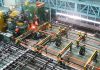
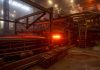
Among the technologies selected by INCITE is ENERGIRON, a process for producing direct-reduced iron (DRI) that uses gas instead of coal. It can operate with natural gas, syngas, biogas, and up to 100% hydrogen, while also enabling CO2 separation and potential reuse within industrial ecosystems. Another key solution is Consteel® and its latest evolution, Consteerrer®, which enables pre-heating and continuous scrap charging in electric arc furnaces (EAFs). The integration of electromagnetic stirring improves energy efficiency, process stability, and operational flexibility. The Open Slag Bath Furnace is another innovative solution, designed for melting DRI, particularly when feedstock quality is variable, supporting more flexible and resilient low-carbon steelmaking routes. INCITE also includes in the platform innovative techniques for energy recovery systems such as Tenova iRecovery® and Heat Leap as well as technologies for polymer injection into EAFs, and it tracks the development of solutions for residual valorization and downstream processes, including hydrogen-ready furnaces, advanced pickling systems, and digital texturing technologies.
What has been the customer response to the technology Tenova’s offering that aids in the decarbonization process?
Steelmakers are increasingly adopting Tenova’s innovative technologies at full industrial scale rather than limiting them to pilot applications. In Europe, several plants are already operating with Consteerrer® combined with iRecovery®, while ENERGIRON-based DRI plants, already established worldwide, are now being commissioned even here. Recent geopolitical developments have accelerated a more pragmatic approach to decarbonization. It is no longer seen only as a regulatory or environmental obligation, but also as a strategic factor linked to energy security, industrial resilience, and long-term competitiveness. The inclusion of Tenova technologies in the INCITE platform confirms their alignment with both customer expectations and broader climate and industrial priorities, addressing not only CO2 emissions but also efficiency, resource use, and overall environmental performance.
Anything else you’d like to mention that we didn’t talk about?
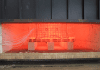
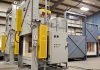
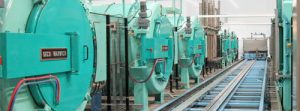
Steelmaking is progressively shifting toward electric arc furnace (EAF) -based routes, including scrap and DRI charge and CCUS solutions that structurally reduce upstream emissions. This transition consequently increases the importance of downstream technologies, such as reheating and heat treatment, in achieving low-carbon steel production. Tenova has a strong tradition and expertise in these areas, with solutions designed to optimize energy efficiency, reduce emissions, and maintain product quality and operational flexibility.
More info tenova.com