




When it comes to heat treating, carbon often plays a vital part of almost any process. That’s particularly true when it comes to various parts heat treated in vacuum furnaces.
Carbon is a useful material because of its wide range of properties — mechanical, electrical, and thermal. Schunk has a long history in the U.S. of providing electrical and mechanical components, and now they are adding a focus to the thermal side of the carbon equation.
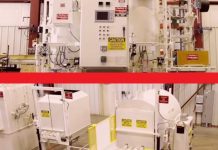
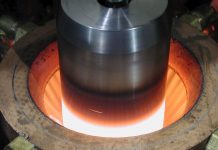
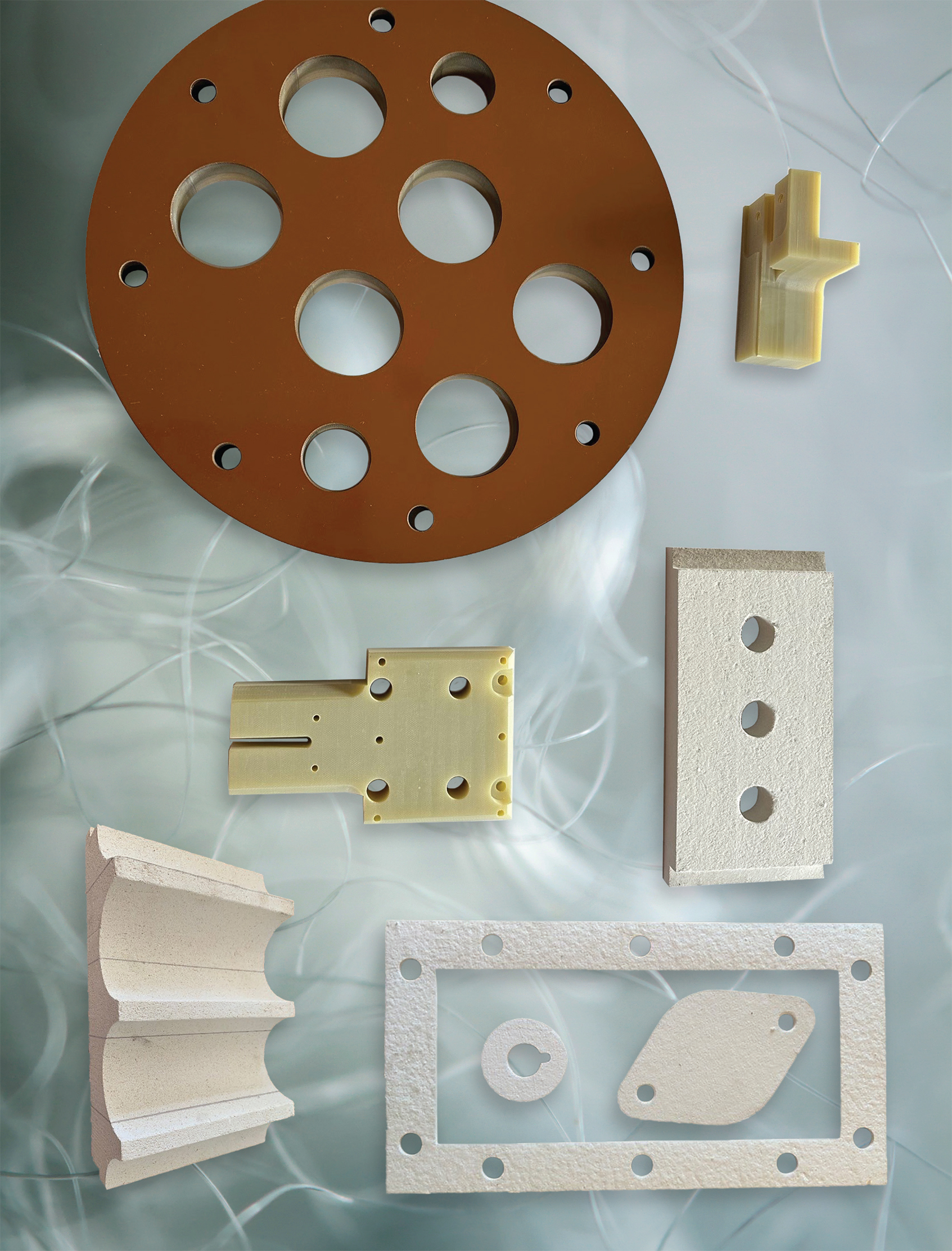
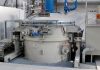
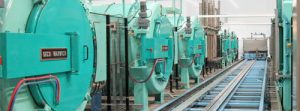
“Out of our location here in the U.S., we focus on fixturing or carrier trays to heat treat metal parts in vacuum furnaces,” said Brett Swenson, Strategic Business Area Manager, North & Central America — Thermal Carbon sales at Schunk. “In an open-air atmosphere, carbon-fiber fixturing will oxidize due to the presence of oxygen, but in a controlled atmosphere, like in a vacuum furnace, it can be an excellent alternative to alloy fixturing. We’ve assembled a team of engineers dedicated to these materials here in the U.S. And over the last two years we have built up our production capabilities, and so we now have a one-stop solution now for our customers where they can come to us, and we can design and build custom-based fixturing for them.”

Carbon-based fixturing
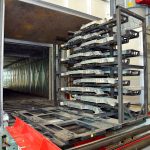
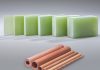
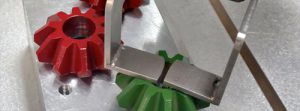
The carbon-based fixturing created by Schunk is a lightweight alternative to alloy fixturing, according to Swenson.
“This means you can run more parts per load,” he said. “Carbon fiber also heats up and cools down quicker than alloy, allowing for reduced process times. A benefit is that it holds its form over repeated cycles, compared to alloys that warp over time. This means increased repeatability, and in a world where a lot of processes are changing over to being automated, repeatability is key. We also offer all of the relining components and graphite insulation for vacuum furnaces, as well as carbon fiber temperature uniformity fixtures.”
As Schunk remains on the cutting edge of technology, it has allowed the company to enter the aerospace and defense fields, as well as renewable energy, according to Swenson.
“We develop advanced materials for large-scale battery storage applications and collaborate with transit authorities nationwide to electrify buses as they transition away from diesel, he said. “We also supply materials to companies pioneering clean carbon black and clean hydrogen production, as well as those manufacturing graphite for EV batteries. You have these new technologies that are helping drive sustainability and improve the environment, and we see our responsibility there to help supply materials for those types of markets.”
Decades of change
To that end, Schunk has been and continues to be forward thinking, according to Swenson.
“We’ve been able to keep up with a lot of changes over the decades,” he said. “We started as a materials company, but we realized there was an opportunity to get into the machine side as well. Globally, the Schunk Group is now split into two divisions: Materials and Machines. One of the strengths of Schunk is the diversity of its portfolio. The location I am based out of in Wisconsin specializes in the manufacturing of carbon-based products. But we have another location that focuses on technical ceramics and graphite used in the production of semiconductors.”
Schunk’s ability to diversify has kept it competitive as well as innovative, according to Swenson.
“We acquired a company that makes machines that cut glass for optical lenses,” he said. “We also have a company that builds ultrasonic welding machines. By being able to diversify the different products that we can offer, we’ve been able to evolve as a company. We’ve seen a lot of crossover between those types of industries and markets as well. We might be in a heat-treat facility and see that maybe they’re using a product that we could offer a solution using our electrical carbon for or maybe use the mechanical carbon for. There’s a lot of opportunity there, and I feel like we’re in a good position to capitalize on that.”

Customer focused
Innovation isn’t the main ingredient to Schunk’s success. Focusing on the customer is just as important, according to Swenson.
“We’re customer first; we are really idea driven,” he said. “A lot of the investment that we have goes into research and development. We like to break into new markets. We like being on the cutting edge of different technologies, but if we do something, we’re not going to do it unless we know that we can do it well. We take risks, but it’s always a calculated risk. That approach sets us up for strong, long-term solutions and stability. That’s how we view our customers as well. We don’t want to just sell the customer something and then walk away. We view our customers as partners, and so we want to continue to support them after the sale is made and continue to collaborate with them on future projects.”
That element of working with its customers is key to Schunk’s longevity, according to Swenson.
“We want to work with our customers,” he said. “We view them as partners, so there’s a lot of collaboration there. We may not be experts in the different processes that our customers are doing, but we know that we can supply materials to help improve their processes. We ask a lot of questions. We try to learn what their processes are. What’s interesting about carbon is that often, when you’re using it, you can identify potential issues in a customer’s process because of the way the carbon interacts or appears at the end of that process. We approach it like a fact-finding mission, and we do a lot of problem solving with them when they bring us their issues. We want to provide a solution that’s practical for them and something that will be a long-lasting solution for them.”
More than a century of solutions
Schunk has been in business for more than a century, so it stands to reason that the company has received many accolades and been at the forefront of innovative products. For example, Schunk has won many supplier quality awards with large OEMs in the automotive and aerospace industries.
On the heat-treat side, Schunk developed a product called the UniGrid, according to Swenson.

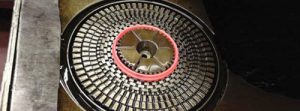
“It’s a single carbon fiber that’s woven into a grid pattern, and then we add a carbon-based resin to hold it all together,” he said. “It’s a two-foot by three-foot grid, and, depending on how it’s positioned, it can hold up to a couple hundred pounds. It’s used as an off-the-shelf option as a carrier tray on the heat-treating side of things. We started selling those to customers 15 years ago, and they’re still using the same ones today. It’s a long-lasting product. What we aim to do as a company is make high-end, long-lasting products.”
Unique history
Schunk’s innovative solutions are surely enough to keep it high on the industrial map, but perhaps just as interesting is the way the company is structured.
Schunk was founded in 1913 by Ludwig Schunk where it started as a carbon brush company. Over the decades, Schunk continued to acquire other carbon-based manufacturers, and in the 1970s, it moved to the U.S., according to Swenson.
“We’ve been in the U.S. for about 40 years with the carbon-manufacturing side, and that’s the facility that I work at now, which is a little bit north of Milwaukee,” he said. “We’re a materials supplier. Schunk is separated into two different sides: There’s the materials side, which is all carbon-based materials, and then there’s the machine side.”
When Ludwig Schunk died, he had no one to leave the company to, so instead of leaving it to a child or another owner, he created a foundation that’s still set up that way today, according to Swenson.

“The Schunk Group has many characteristics of an employee-owned business, as it’s set up as a foundation, and has a board that manages the foundation,” he said. “All of the companies, which are in 26 different countries — and there are over a hundred companies with over 10,000 employees — they all report back to the Schunk Group. All of the profits go back to the group, and they reinvest all of that money into the employees and into the company. Whether that’s R&D, buildings, merger acquisitions, or other initiatives, it all gets put back into the company. This structure creates a real stability and long-term strength.”
And if that sounds unique, it is, often to the astonishment of others, according to Swenson.
“We like telling that story, because every time we tell the story, that’s kind of the reaction that we get — it’s a very unique setup,” he said. “We’re not publicly traded in any country. We don’t have to answer to a board of directors. We have a nice setup that creates a good culture for the employees.”
Eye on the future
That company structure has been a benefit to the diversity and innovation that Schunk has been successful with, and with its foot already into the next century, Swenson said challenges will be met with the same expertise and enthusiasm that it always has.
“Obviously, politics influence the future, and they’ll always influence it,” he said. “Every election cycle you’ll see a change, but right now, we see a lot of manufacturing being brought into the U.S. We see the manufacturing sector growing in the U.S., and we’re trying to position ourselves to be able to support that growth and be a part of that growth.”
As an example of that, Swenson pointed out that, up until about two years ago, Schunk didn’t have any production capabilities in the U.S. for the heat-treat side of the business.
“We’ve had our production facility for 40 years, but it supported our other business units,” he said. “Now we’ve brought it in for the thermal carbon side. The whole idea is that we’re trying to keep up with where we see the industry going. We feel that we can be a good local partner to help supply manufacturers who are looking to create locally made products. From an engineering and fabrication standpoint, we think we’ll be in a good spot to be able to do that.”
More info www.schunk-group.com