





What is heavy mill scale, and what problems can it cause?
Mill scale is a thin, flaky layer of bluish iron oxides that forms on the surface of steel during the hot rolling process. Mill scale primarily consists of three different iron oxide layers: wüstite, magnetite, and hematite. Wüstite is the innermost layer, closest to the steel substrate. Magnetite is the middle layer. It’s more stable and denser. Hematite is the outermost layer, comprising a thin, brittle crust. It’s a naturally occurring byproduct of the hot rolling process. It ranges from about four-thousandths of an inch up to several millimeters thick. It can be thick and brittle, non-uniform or uniform, and it creates a barrier to effective welding and surface preparation.
What causes this on hot-rolled carbon steel?
When the steel is heated to a high temperature in a furnace and then rolled into sheets, the surface reacts with oxygen in the air, producing the characteristic coating. The chemistry of the metal, as well as the moisture content and chemistry of the environment, are all variables that will affect the types and amount of scale that will form.
What has Weiler Abrasives done to address this problem?
We’ve developed a solution specifically for this. It is called the Tiger Mill Scale wheel. We’ve gone through a lot of customer requests, customer feedback, and field trials, to get the product we have now.
What makes the Tiger Mill Scale wheel superior to what already exists in the market?
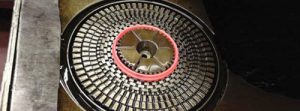
There are very few options out there to start with. Operators will come up with all kinds of cumbersome ways to get the job done. But our formulation lasts longer than the competition because it incorporates a zirconia-based grinding wheel formulation, as opposed to the very few others out there that are more of a softer unitized formulation. We’ve implemented a studded pattern on a Type 29 wheel for easy access to a larger, flatter surface, which minimizes guard interference and the potential to gouge the workpiece. The studded pattern on the surface of the wheel resists loading and allows built-up flakes to shed, providing a smaller localized surface area that breaks through the thick scale.
How was it dealt with before this type of technology existed?
There are other more cumbersome options out there. Manual grinding isn’t the only way to remove mill scale. There are higher cost, more complex ways to remove it. Flame cleaning is quick, but it risks heat distortion and often doesn’t fully remove the scale. There is abrasive blasting, which is fast and effective, but it’s very dusty, and it’s very high in consumable costs. There’s chemical pickling, which is thorough, but it’s very slow, taking about 24 hours. It’s hazardous and it’s waste-heavy. And then, there’s manual grinding, which is precise, but can be labor-intensive, slow for large areas and most abrasives would tend to clog and stop working. That’s why we came up with this option: to make manual mechanical grinding a viable and efficient method.
What types of industries see heavy mill scale removal as a critical operation, and why is that?
It’s critical in construction, manufacturing and fabrication, automotive and heavy equipment, transportation, oil and gas, natural energy — really anywhere hot-rolled steel is used in heavy structural fabrication.
As I mentioned, removing mill scale is critical to ensure proper weld penetration. Our wheel quickly and easily removes mill scale without gouging or removing too much base material. The operator can move quickly over the surface without dwelling or excessive force, and the resulting steel surface is free of scale and ready to accept a weld. When the surface isn’t clean, the mill scale itself causes porosity, lack of fusion, weld defects, and reduces weld quality. It creates barriers to effective welding and surface prep. It acts as an insulator, causing arc instability and poor heat transfer while you’re welding. It leads to a weak fusion and compromised structural integrity of the weld itself. And ultimately, it can end in weld failures, costly rework, and potential catastrophic failures.
What has been the market response to the Tiger Mill Scale wheel?
It’s been excellent. The operators who have tried it ask how fast they can get it in their shop. Most of the work we’ve been doing was ahead of the launch, which was only a few weeks ago, so we can’t get it to them fast enough, which is always a good thing.
More info www.weilerabrasives.com