





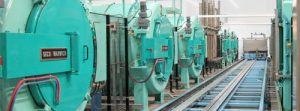
Heat-treat operations depend on equipment that must perform consistently under demanding conditions. Furnaces, ovens, burners, quench systems, conveyors, fans, pumps, sensors, atmosphere controls, instrumentation, and supporting utilities all affect process stability, product quality, energy use, safety, and production reliability.
Most heat-treat facilities already collect large amounts of maintenance and inspection information. Operators complete checks. Maintenance teams respond to work orders. Contractors provide service reports. Quality teams review process records. Supervisors track downtime, repairs, and equipment concerns. Yet much of this information is often reviewed as individual maintenance data rather than as part of a long-term asset history.
That creates a practical problem. A burner adjustment, fan vibration issue, sensor drift, quench system concern, conveyor problem, atmosphere-control issue, or recurring furnace alarm may appear routine when viewed alone. When the same condition returns over time, appears across similar equipment, or follows certain production conditions, it may point to a larger reliability or process-control issue.
For heat-treat operations, better inspection history is not about collecting more data. It is about making existing records useful enough to support maintenance planning, process consistency, safety, and long-term equipment reliability.

Recurring problems often look routine
Heat-treat equipment operates under stress. High temperatures, thermal cycling, combustion conditions, atmosphere control, quench exposure, moving components, and production pressure all affect asset condition. Many problems do not appear as a single sudden failure. They develop gradually and show up as repeated small findings.
A furnace may require another burner adjustment. A fan may show vibration again. A conveyor may need another alignment correction. A thermocouple or sensor may drift more often than expected. A quench pump may lose performance during heavy production periods. A door seal may require repeated attention. Each issue may be corrected properly at the time, but the larger question is whether the condition keeps returning.
When repeat issues are not recognized as patterns, maintenance teams can spend time correcting symptoms without addressing the reason they continue to appear. A single temperature uniformity concern may be investigated and resolved. Repeated concerns may suggest a need to review heating elements, burners, controls, airflow, loading practices, insulation condition, instrumentation, or maintenance intervals.
The same applies to supporting systems. A quench system issue may involve pump performance, agitation, contamination, filtration, temperature control, or operating practice. A fan issue may involve balance, bearing condition, buildup, lubrication, access, or operating environment. A repeated conveyor issue may involve loading, alignment, wear, heat exposure, or mechanical design.
Inspection history helps separate isolated maintenance events from recurring conditions that require deeper review.
Inspection records need asset-level context
A completed inspection checklist confirms that a task was performed. It does not always help the next technician, supervisor, or engineer understand what was found, what changed, or whether the condition has appeared before.
For heat-treat equipment, an effective inspection record should connect each finding to the specific asset, component, location, observed condition, severity, corrective action, supporting evidence, and follow-up result. A note that says “furnace checked” or “burner adjusted” may close a task, but it may not provide enough detail for future troubleshooting.
A stronger record might show a furnace had uneven heating during a particular production run, that a burner adjustment was made, that a specific sensor reading was reviewed, that airflow was checked, and that a similar condition returned during a later run. That history changes the maintenance conversation. The issue is no longer only a one-time adjustment. It may require review of control logic, instrumentation, burner performance, circulation, loading, refractory condition, or operating practice.
Asset-level context is especially important in facilities with multiple furnaces, ovens, quench systems, or similar support equipment. If one asset repeatedly produces more maintenance findings than similar assets, that history can help justify further inspection, repair planning, or replacement evaluation.
Digital approaches to inspection data management can support this by connecting inspection findings, asset history, corrective actions, photos, and reports in a more consistent workflow. (Source: Field Eagle)
The important point is not the software itself. The important point is that inspection records remain connected to the asset and can be reviewed over time.

Corrective actions should close the loop
Corrective action is where many maintenance programs lose important context. A finding is identified; a repair is assigned, and the task is closed. Closure may confirm that work was completed, but it does not always show whether the underlying condition was resolved.
In heat-treat operations, a repair that looks successful during downtime may not hold under normal production conditions. A fan may run smoothly after service but show vibration again after exposure to heat and load. A quench pump may perform properly after adjustment but lose efficiency during heavy use. A furnace door seal may be repaired but degrade again because of alignment, usage, thermal cycling, or maintenance frequency.
A useful corrective-action record should show what was found, what was done, who completed the work, whether parts were replaced, whether the repair was verified under operating conditions, and whether follow-up inspection is needed. If the same condition has appeared before, that should be visible.
This feedback loop matters because heat-treat equipment often affects quality as well as uptime. A recurring maintenance issue may influence temperature consistency, atmosphere control, quench performance, or process repeatability. If corrective actions are treated only as closed tasks, teams may miss the connection between maintenance history and process performance.
Closing the task is not the same as closing the loop. Better history helps determine whether a corrective action solved the problem or only delayed its return.
Better history supports process consistency
Heat treating depends on controlled conditions. Temperature, time, atmosphere, quench performance, equipment condition, and load configuration all influence results. Maintenance history does not replace process controls or quality systems, but it can provide useful context when equipment behaviour changes.
For example, if a furnace begins showing recurring temperature variation, maintenance history can help teams review whether similar issues have occurred before and what actions were taken. If quench performance concerns appear repeatedly, inspection records may help identify whether pump performance, agitation, contamination, filtration, or heat-exchanger condition has been changing over time.
Inspection history can also support maintenance prioritization. A minor finding on one asset may be routine. The same finding repeated several times on a production-critical furnace may deserve earlier attention. A recurring issue on equipment tied to tight quality requirements may require more urgency than the same issue on a less critical asset. For heat-treat facilities managing multiple jobs, equipment types, customer requirements, and production schedules, this context helps teams make better decisions about what to inspect, what to repair, and what to monitor.

High-temperature environments need trend visibility
Heat-treat equipment often deteriorates gradually. Refractory and insulation wear. Seals degrade. Bearings and fans experience heat-related stress. Sensors drift. Burners require adjustment. Conveyors and rollers are exposed to heat, scale, loading, and wear. Pumps and quench systems experience demanding operating conditions.
Single inspection records may not show enough to identify risk. Trend visibility is what makes gradual deterioration clearer.
A facility may discover that one furnace requires more frequent burner adjustment than others. It may notice that a fan requires repeated bearing attention. It may see that a quench system loses performance during specific operating periods. It may find that certain conveyors require repeated alignment or component replacement. It may identify instrumentation that drifts more frequently in one zone or process area. These patterns support practical decisions. Maintenance teams can adjust inspection frequency, review spare parts needs, schedule deeper repairs, investigate operating conditions, or plan work during controlled downtime. Trend visibility can also help identify when a repair is no longer enough and replacement or redesign should be considered.
AI depends on complete maintenance records
Artificial intelligence is increasingly discussed in relation to preventive maintenance, asset reliability, and industrial operations. In heat-treat environments, AI-supported tools may eventually help teams review maintenance history, identify recurring failure patterns, compare similar assets, and prioritize inspections or corrective actions.
However, AI cannot compensate for poor maintenance records. If asset names are inconsistent, findings are vague, photos are not tied to the correct equipment, corrective actions are incomplete, or work history is scattered across disconnected files, advanced analytics will have limited value. AI can help preventive maintenance programs by analyzing inspection history, asset condition, recurring defects, and corrective-action outcomes to identify risk patterns and support more informed maintenance planning. (source: Field Eagle)
For broader AI implementation, the same principle applies: AI is more useful when it is connected to business workflows, structured data, and specific decision points rather than treated as a standalone tool. (source: Konverge) For heat-treat operations, the preparation work is practical. Standardize asset names. Define defect categories clearly. Attach photos and inspection notes to the correct equipment. Record severity and location consistently. Connect findings to corrective actions. Review whether corrective actions prevented recurrence. These steps improve maintenance decisions now and create a stronger foundation for future analytics.
Practical steps for heat-treat teams
Heat-treat operations do not need to redesign their entire maintenance program to make better use of inspection history. They can begin with recurring equipment issues that already consume time and attention. First, select a small group of high-maintenance assets. Good starting points might include a furnace with recurring temperature concerns, a quench pump with repeated performance issues, a fan with vibration findings, a conveyor with alignment problems, or instrumentation that requires frequent adjustment. Second, review the last several months of inspection notes, work orders, service reports, photos, and corrective actions for those assets. Look for repeated conditions, repeated components, repeated locations, and repairs that did not prevent recurrence.
Third, standardize defect descriptions. If one technician writes “fan noise,” another writes “bearing issue,” and another writes “vibration,” the same condition may be difficult to analyze. Consistent language makes trends easier to identify.
Fourth, connect every finding to the correct asset. Work orders, inspection notes, photos, and corrective actions should remain tied to the equipment involved, not only to the department or production area.
Fifth, improve closure notes. “Fixed” or “completed” may close the work order, but it does not help future troubleshooting. A useful closure note explains what was done, whether the repair was verified, and whether follow-up is needed. Finally, review repeat findings regularly with maintenance, operations, quality, and engineering. Some recurring problems are mechanical. Others involve process conditions, operating practice, loading, cleaning, controls, instrumentation, or equipment design. A shared history helps teams make that distinction.
From maintenance data to maintenance decisions
Heat-treat operations do not need more disconnected records. They need inspection and maintenance histories that explain what is happening to critical assets over time. A furnace that keeps requiring adjustment, a fan that repeatedly develops vibration, a quench system that loses performance under load, or a conveyor that needs the same correction repeatedly should not be viewed only as a series of completed tasks. Those records may show where maintenance labor is being consumed, where reliability risk is building, and where a deeper review could prevent the next recurring issue.
When findings, corrective actions, photos, and verification notes are connected to the asset, maintenance teams can see which issues are isolated and which ones are recurring. They can prioritize work based on evidence, plan repairs under more controlled conditions, and identify assets that require engineering review, inspection changes, or replacement planning.
The most useful maintenance record is not the one that simply proves work was completed. It is the one that helps the next person understand what happened, what was done, and whether the condition is likely to return. For heat-treat operations working under high temperature, demanding production schedules, and strict process requirements, that understanding can make the difference between repeatedly fixing the same problem and improving the reliability of the process itself.